
The structure of contemporary Indian higher education, particularly in management, technology, and the sciences, has evolved substantially under Western pedagogical frameworks. While these systems have strengthened academic standards and global engagement, they often operate within cultural and philosophical assumptions that do not fully reflect India's rich intellectual heritage. As a result, a gap persists between India's civilizational knowledge traditions and mainstream professional education.
Indian Knowledge Systems (IKS) embody this vision. IKS represents a vast and evolving body of intellectual, scientific, philosophical, and socio-cultural thought developed over several millennia. These traditions evolved as interconnected frameworks grounded in a holistic understanding of ethics, governance, economy, society, and human purpose. IKS provides a comprehensive perspective that deeply integrates science, ethics (Dharma), and economic prosperity (Artha).
Foundational works such as the Arthashastra, Bhagavad Gita, Vedas, and Upanishads provide enduring insights into leadership, strategic thinking, stakeholder orientation, governance, and sustainable enterprise. Integrating traditional insights from Indian philosophy, economics, and governance with modern management pedagogy can enrich pedagogy, research, and executive training and foster a new generation of academicians, students, and leaders who are "globally competitive yet locally rooted."
The establishment of a Center for Indian Knowledge Systems represents a strategic academic initiative aligned with national policy priorities and evolving leadership needs. By integrating India's intellectual heritage with contemporary management education, the Center seeks to institutionalize the study, interpretation, and application of IKS within management education in a structured and academically rigorous manner, which will contribute to academic innovation, responsible leadership development, and institution-building grounded in ethical and sustainable principles.
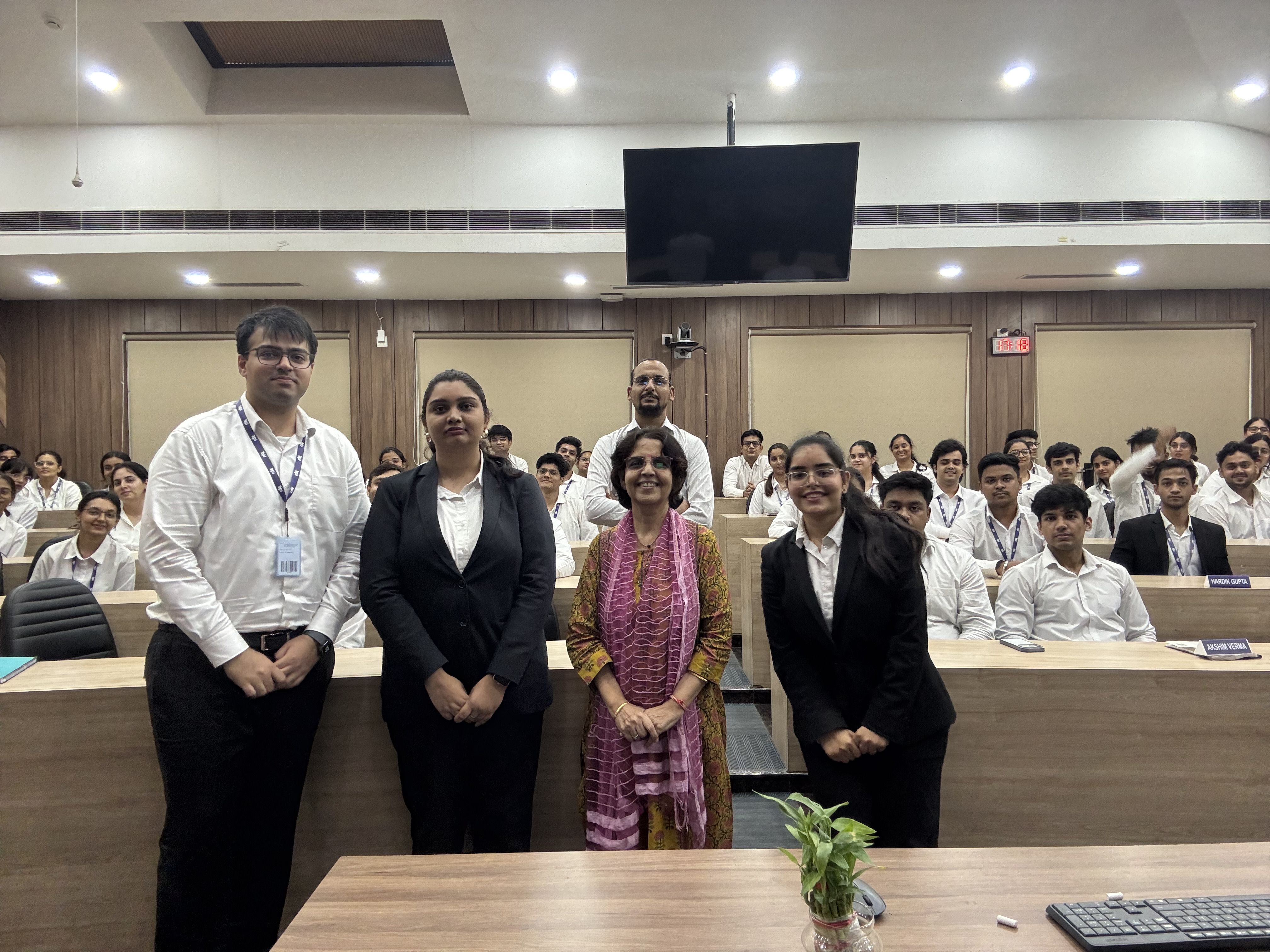
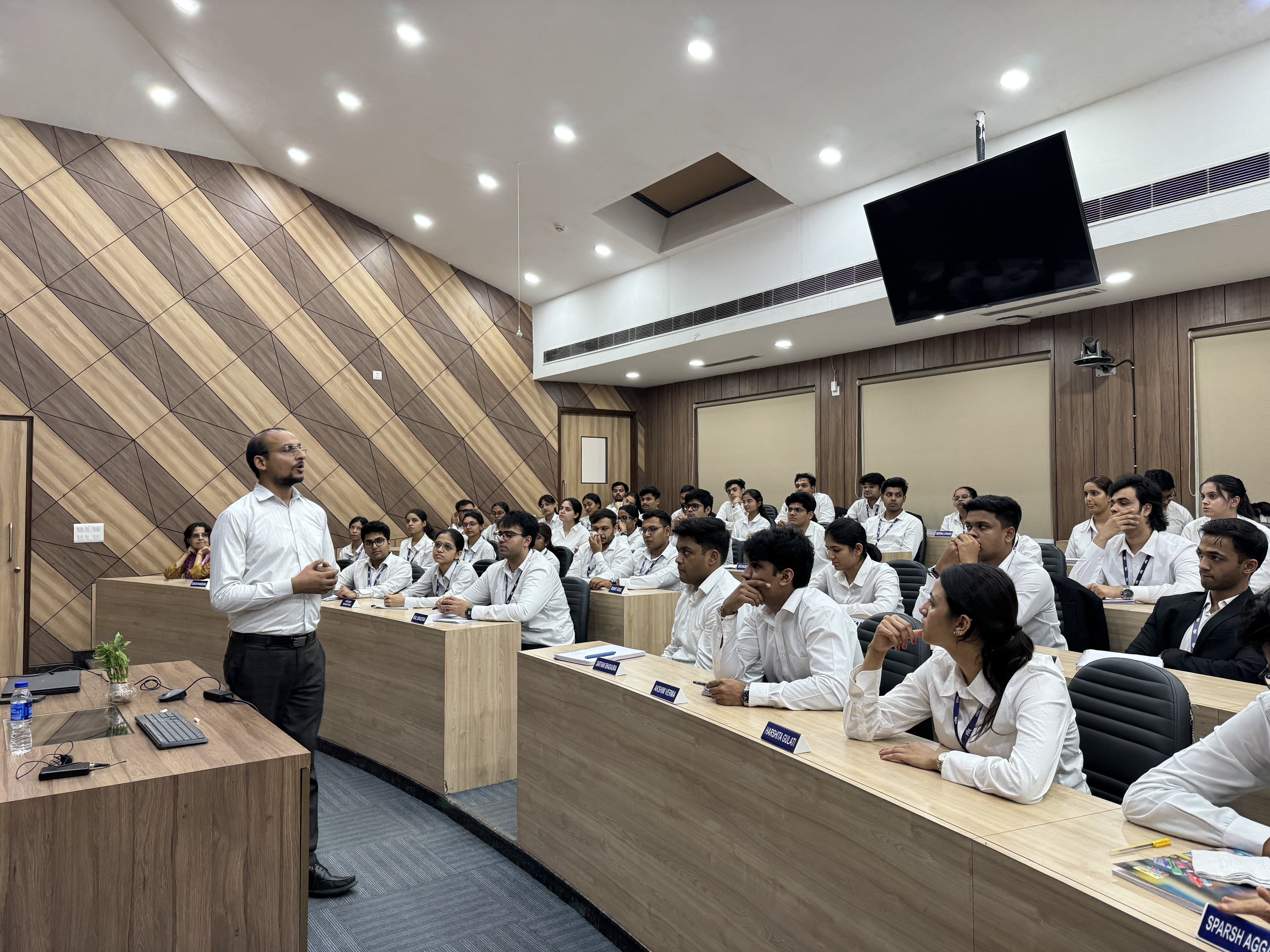
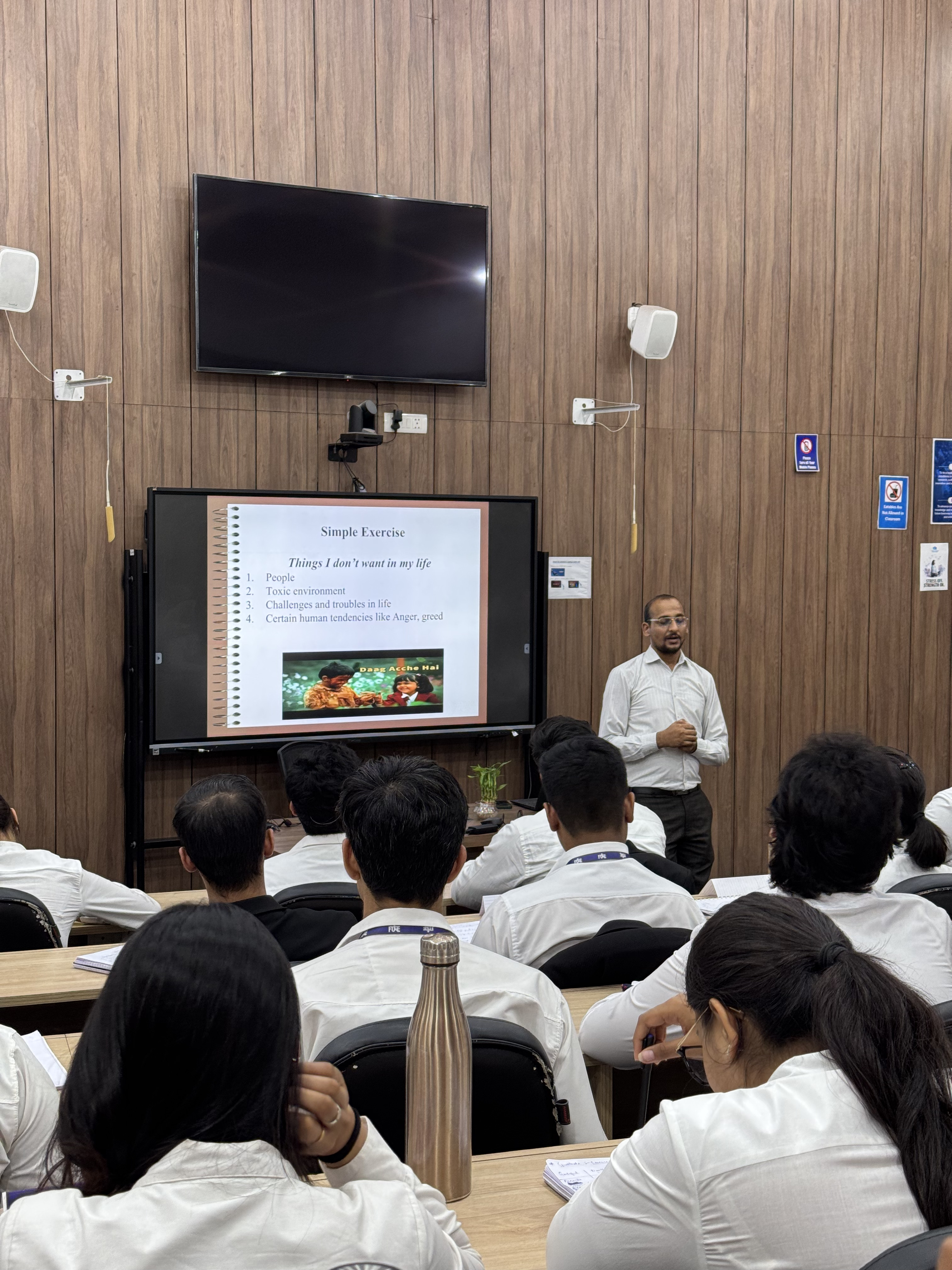
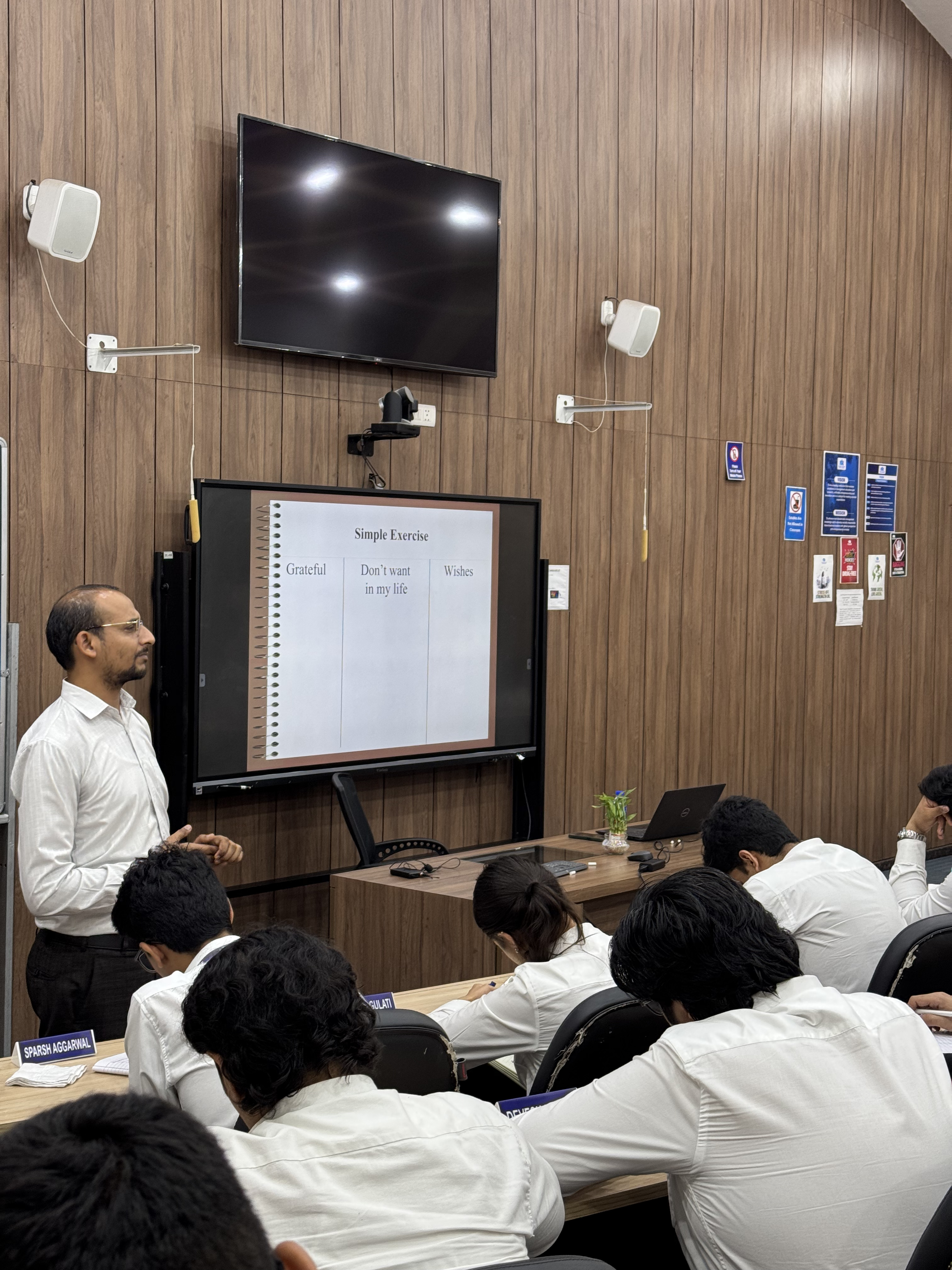
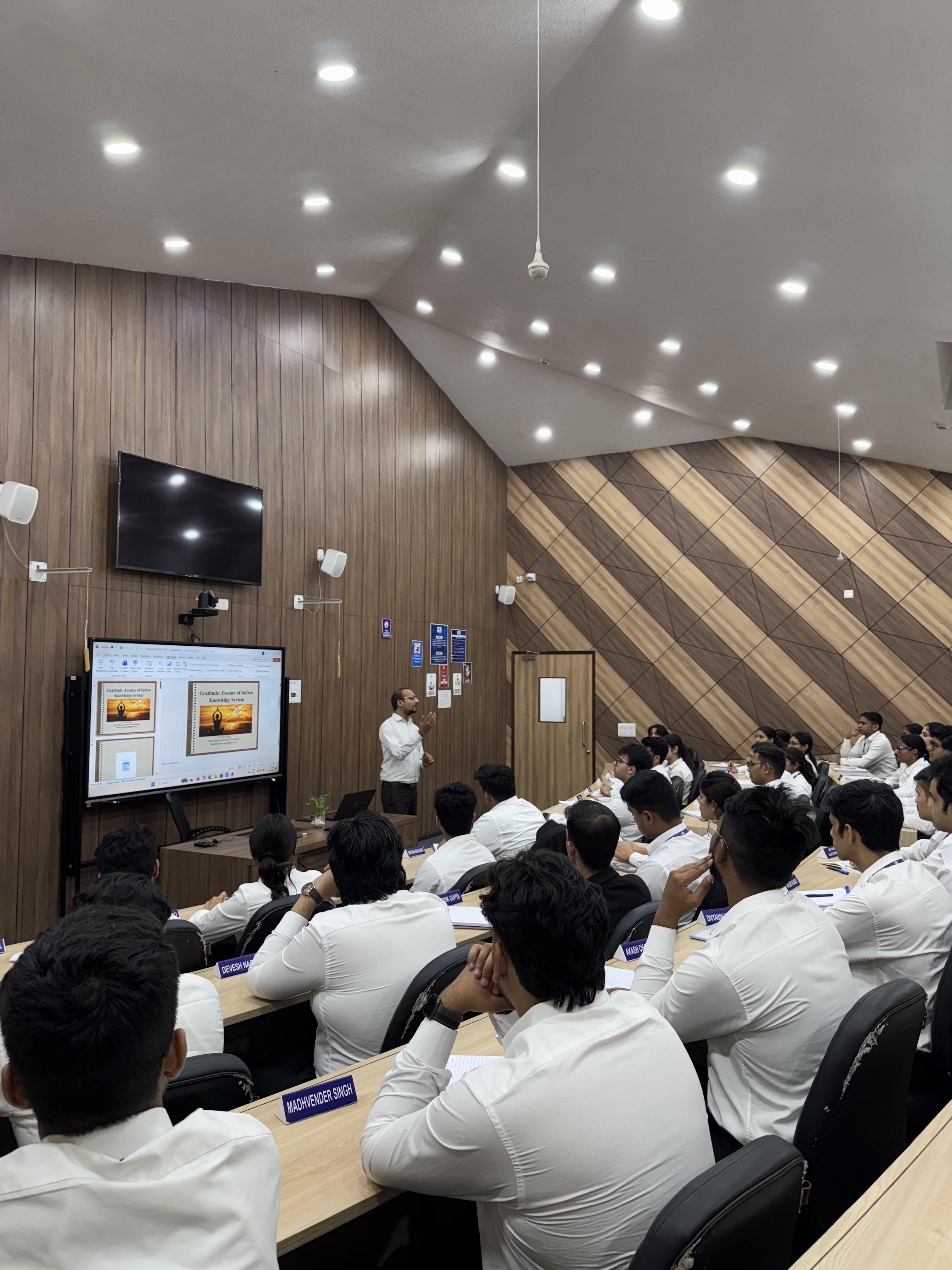
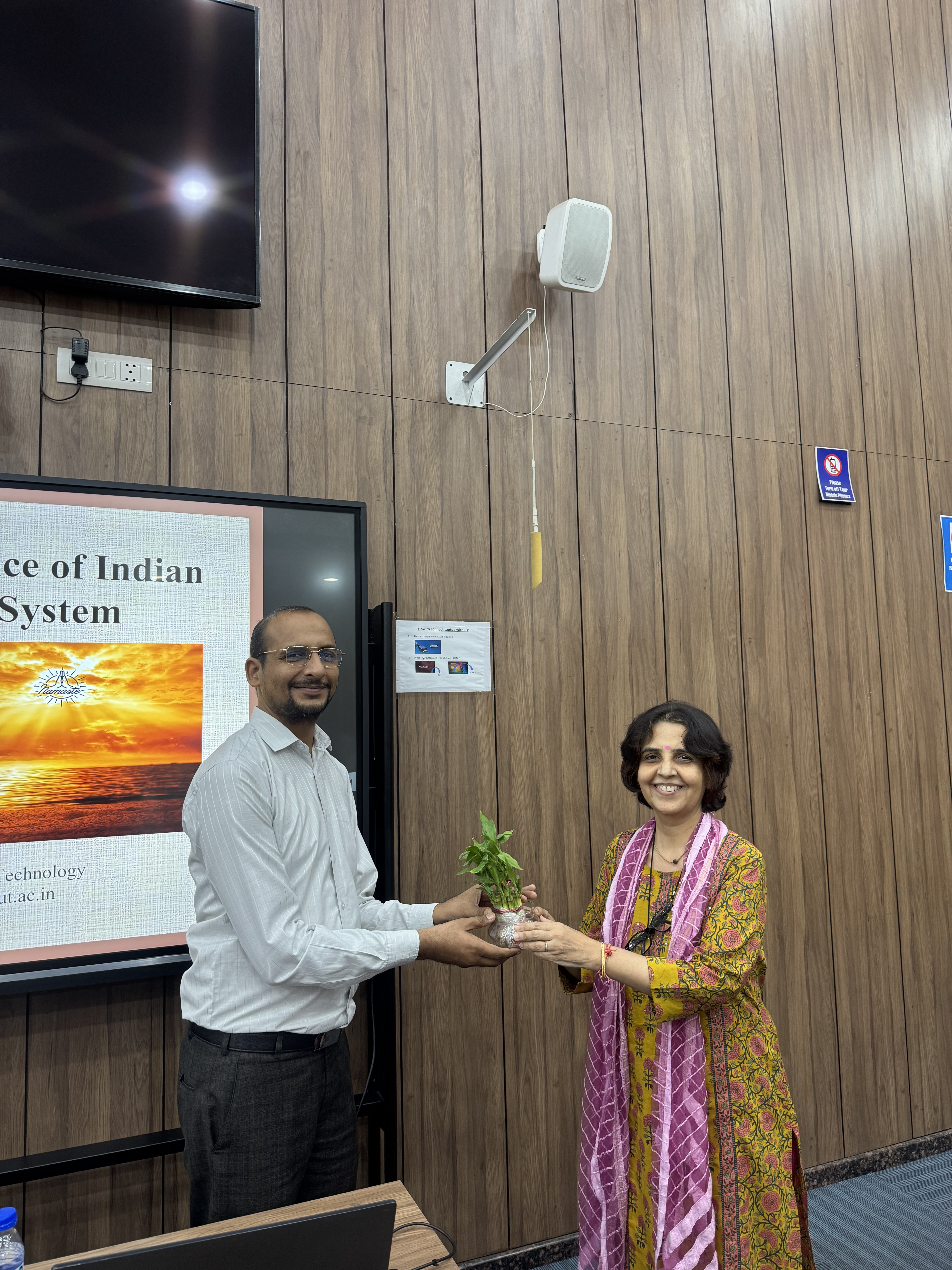
उन्मेष hosted a seminar on gratitude as a core value in Indian Knowledge Systems. The session looked at how kritajnata (gratitude) shapes character, relationships and leadership. Students took part in a reflective exercise, sorting their lives into three columns: what they are grateful for, what they don't want in their lives, and their wishes. The session also showed how challenges and difficult people can be reframed as teachers. It closed with a felicitation of the speaker and a group photograph with the students.


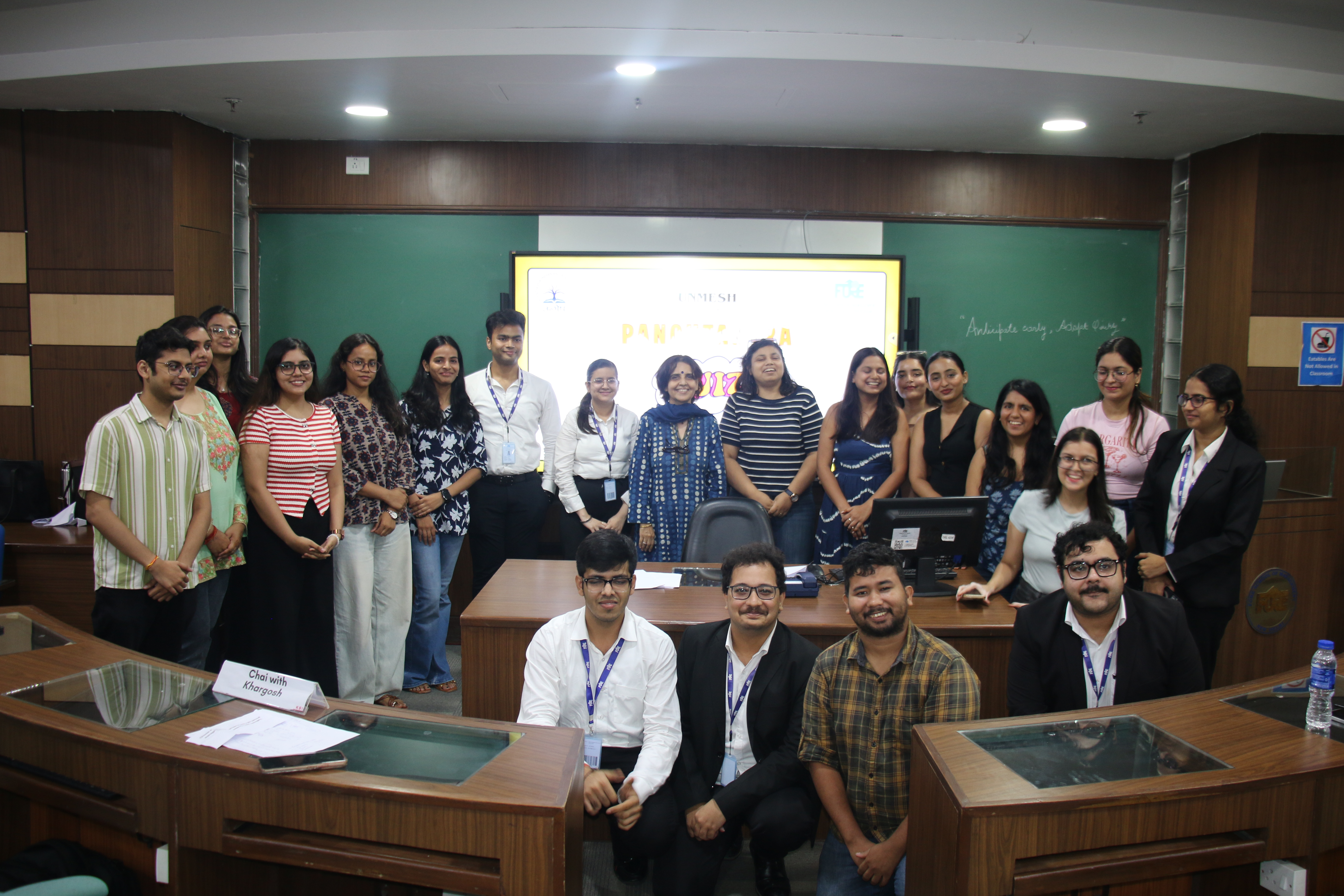
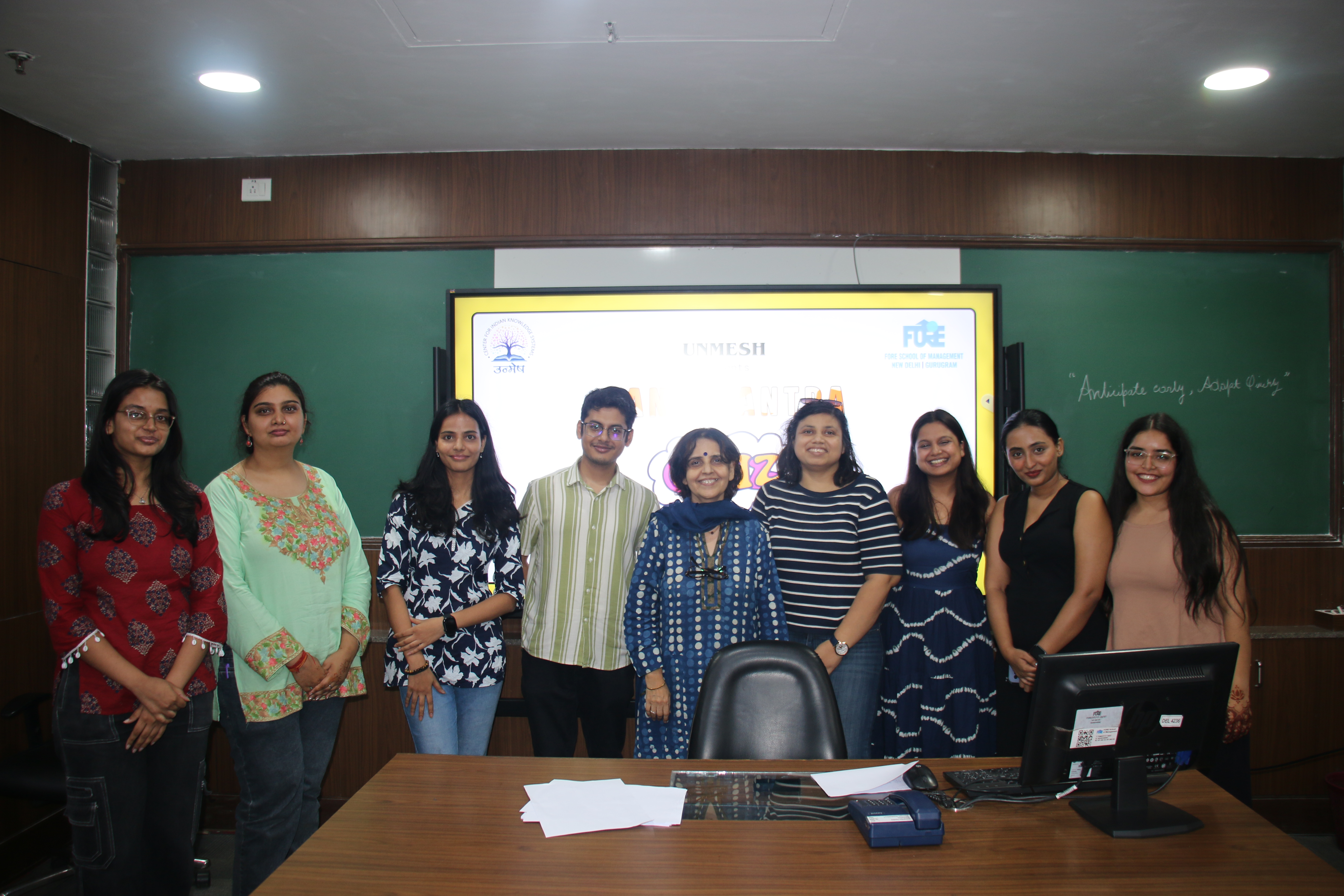
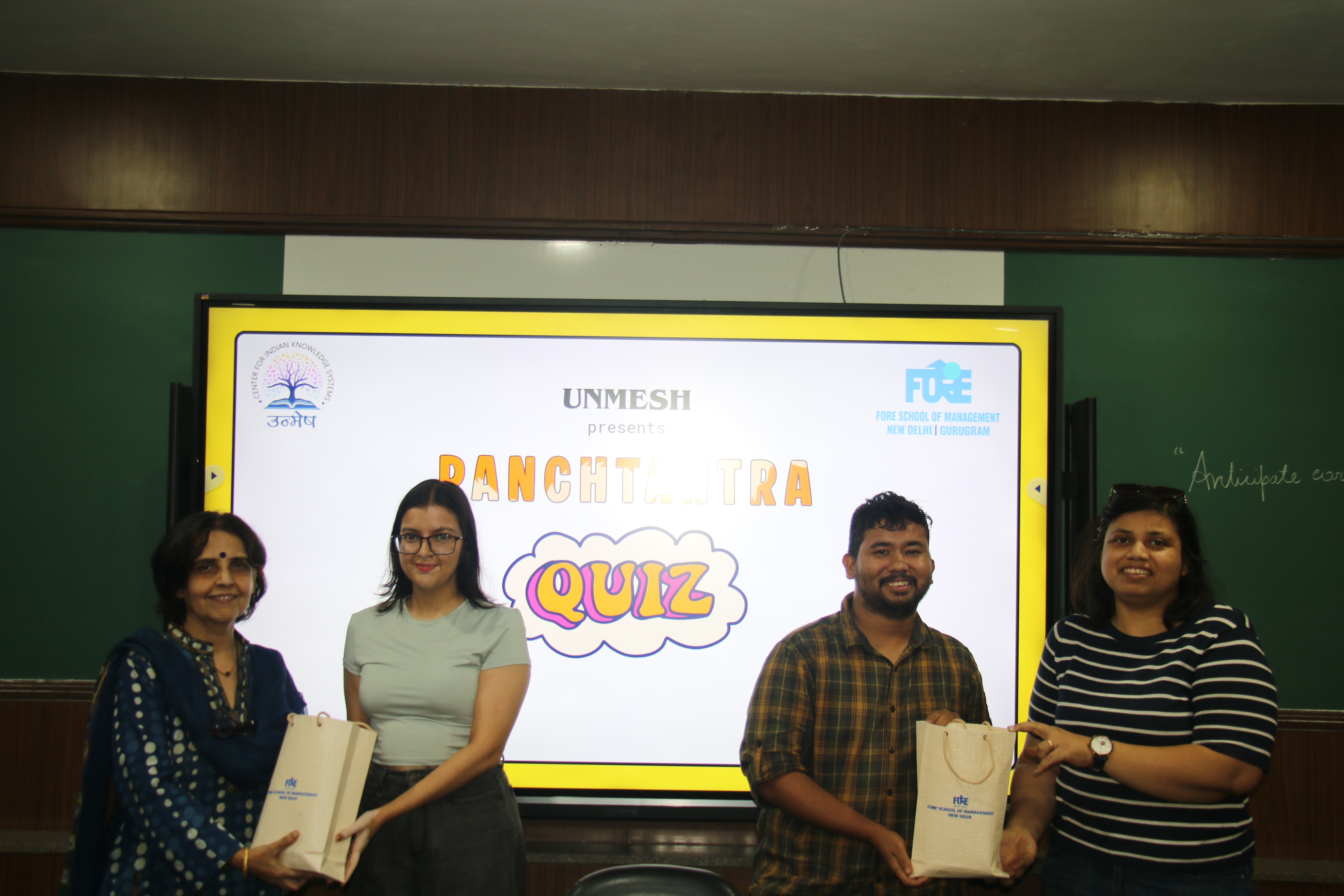
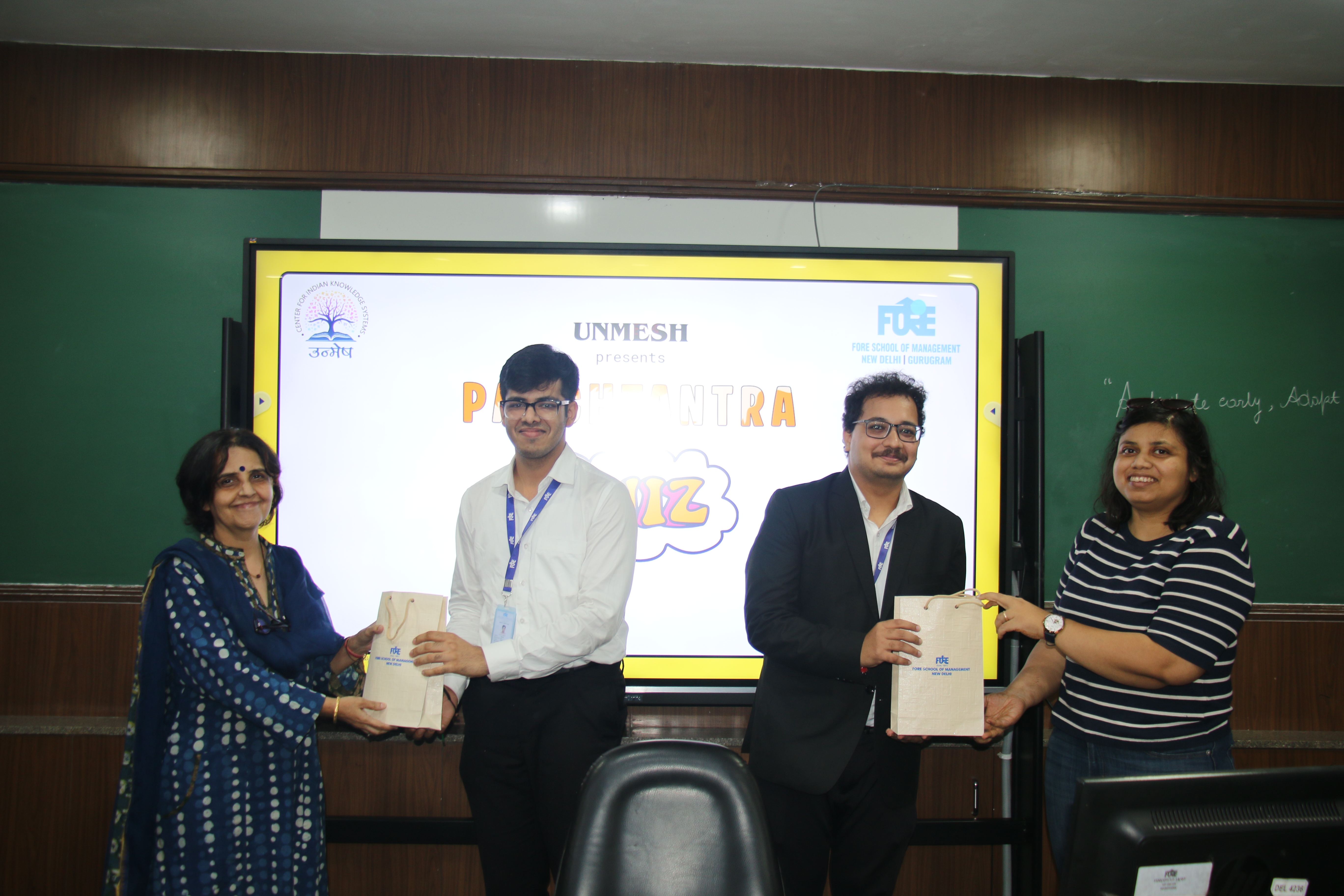
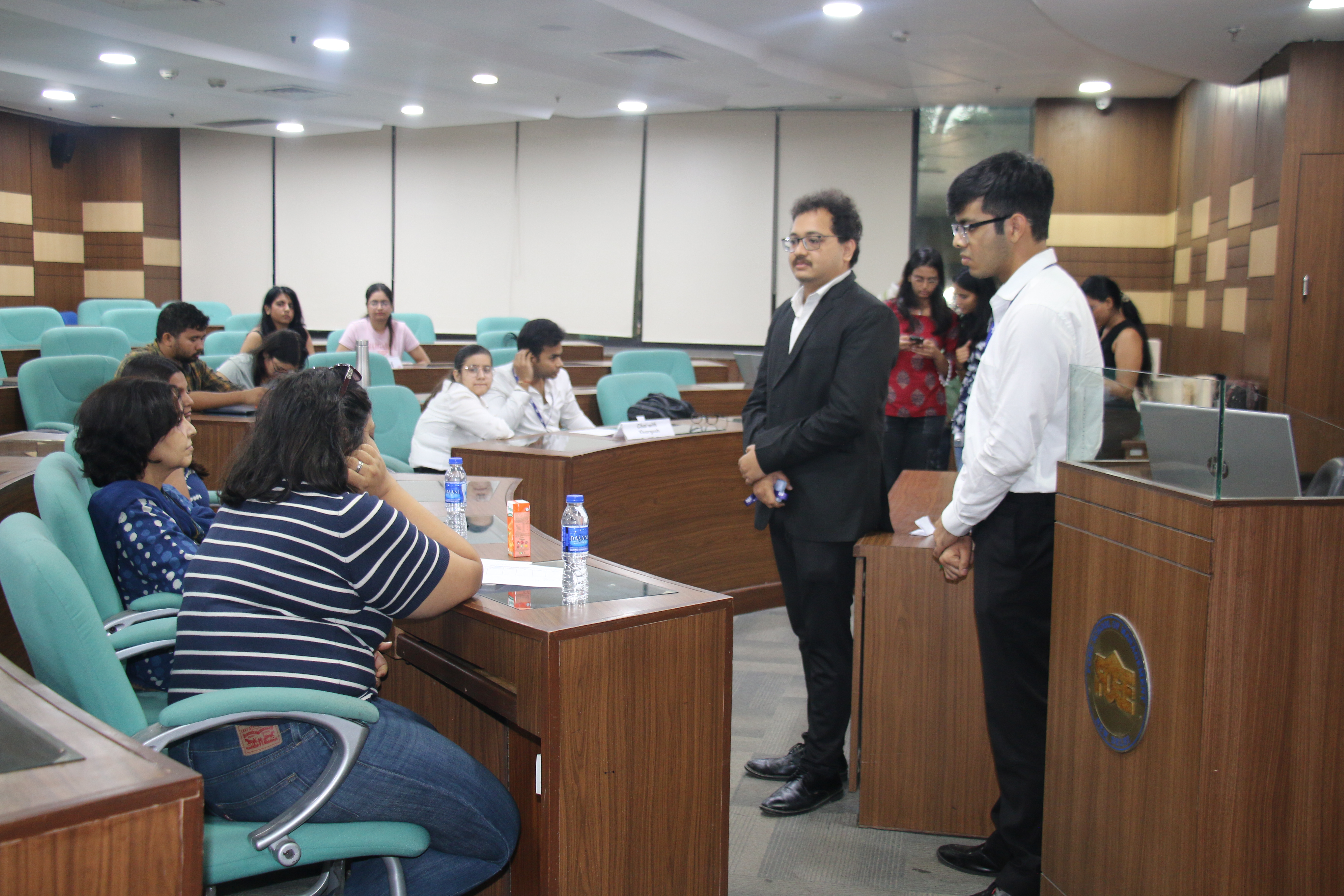
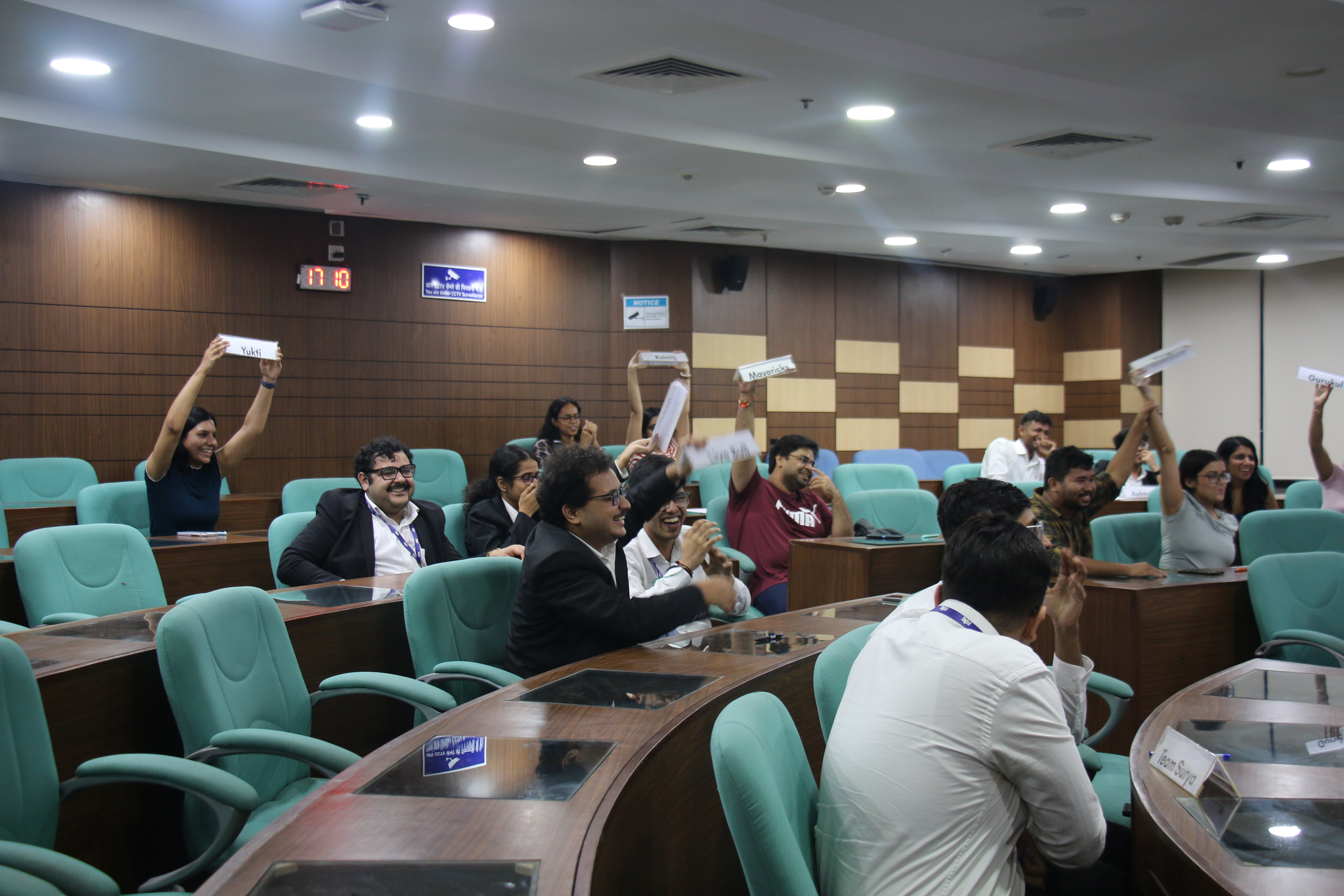
उन्मेष presented the Panchatantra Quiz, where student teams such as Yukti, Kshitij, Mavericks, Gurukul and Team Surya competed on the timeless fables of the Panchatantra and the lessons in strategy, wisdom and leadership they hold. The event closed with prizes for the winners and a celebration with faculty, participants and the Unmesh team.
We are delighted to announce the establishment of a dedicated e-library at उन्मेष — Center for Indian Knowledge System at FORE School of Management: a vibrant space for scholars, researchers, and seekers of Indian knowledge traditions. Thoughtfully curated, this collection reflects our commitment to fostering IKS-related learning, research, content creation, and meaningful outreach initiatives.
The catalogue of books available in hard copy at the e-Library may be accessed through the document below. The collection encompasses a diverse range of texts on Indian Knowledge Systems, philosophy, culture, literature, management, wellness, and allied disciplines.
Download Catalogue PDF →The monthly newsletter of उन्मेष — a space for reflection, dialogue and continuous learning. Each issue explores one timeless value through a Wisdom Corner, a "Did You Know?" feature, student articles and more.
Have an article, thought or artwork rooted in IKS? Share it for the next issue of Manthan.
unmesh-ciks@fsm.ac.in →Whether you are a student, faculty member, industry professional, or cultural institution — there is a place for you in the Center for Indian Knowledge Systems.