
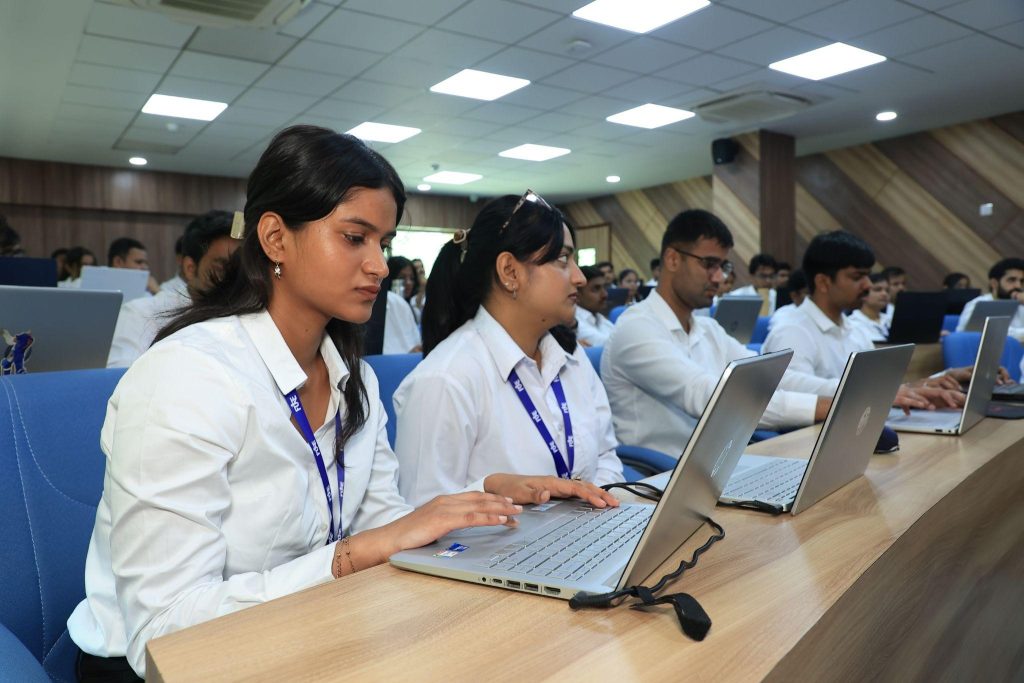
Leaders are not born with all the answers. They are developed through exposure, discipline, and the ability to learn from structured environments. That is why modern businesses prefer individuals who have undergone focused professional development. A PGDM programme is no longer just an academic choice. It is a strategic move for those who want to take responsibility, lead teams, and drive results across sectors.
The way a PGDM programme works is very different from traditional degrees. Instead of relying only on lectures and exams, PGDM students are constantly encouraged to think on their feet and make informed decisions. As a result, they become better equipped for managerial roles that require leadership thinking from day one.
Among the many institutions offering such learning pathways, the FORE School of Management (FSM) stands out due to its deep-rooted commitment to industry-relevant education. Being one of the best PGDM colleges in India, FSM focuses on building leaders who understand strategy, people, and performance.
Leadership Is Built into the Curriculum
A PGDM programme is structured to do more than explain theories. It is curated to prepare students to navigate real organisational challenges. From the first trimester onwards, students face assignments that mirror workplace complexities. They participate in simulations, manage team-based tasks, and receive feedback that helps them develop confidence as decision-makers.
Leadership development is not confined to a single module. It is layered across the curriculum. Students are encouraged to work in groups, lead discussions, and take ownership of deliverables. Through this structure, they gradually build emotional intelligence, delegation ability, and performance accountability. These are qualities that translate into leadership readiness across industries.
At institutions like FSM, these activities are supported by expert faculty who bring in market exposure, industry examples, and global perspectives. This creates a natural environment for building leadership insight, not just classroom knowledge.
Skills That Support Career Growth
To become a successful leader, one must learn how to handle pressure, communicate clearly, and make decisions that are both timely and logical. PGDM students are trained in these skills from the very beginning. Their growth is assessed not only by academic marks but also by how they think, present, and network/communicate with their peers. PGDM supports leadership growth through the following skill-based learning –
- Students learn to manage group dynamics and enhance conflict resolution techniques through practical team assignments.
- Analytical skills are built through case study evaluations paired with real market data interpretation.
- Communication becomes sharper due to regular presentations, peer assessments, and exposure to cross-functional topics.
- Strategic thinking is improved through capstone projects combined with leadership workshops and expert-led seminars
By the time students complete the programme, they are prepared to lead both small teams and complex business initiatives with clarity and confidence
PGDM Encourages Learning Through Experience
A classroom can only go so far. Leadership demands decision-making in uncertain conditions. That is why PGDM programmes include real-time exposure to help students adjust their thinking patterns. Internships and live projects are not optional extras. They are integrated into the learning cycle.
Students learn from industry mentors during internships and apply classroom concepts to live situations. They face client deadlines, resource limitations, and evolving targets. These experiences develop professional maturity that cannot be gained through textbooks alone.
At FSM, the approach to practical learning is structured and diverse. Students engage with real business scenarios across sectors [from pre-placement training to industry-specific labs]. This builds the kind of judgment that leaders need when navigating complexity.
Why PGDM Graduates Fit into Leadership Roles
Not every graduate is ready to take responsibility from day one. That is why PGDM alumni stand apart. Their training is built around leadership behaviour [not just functional roles]. They are taught how to interpret trends, engage teams, and manage change. Here is why PGDM learners often rise into leadership positions –
- Their learning is based on clarity of goals along with accountability for outcomes.
- They receive early exposure to decision-making tools and problem-solving frameworks.
- They learn to take initiative through practical modules and cross-functional projects.
- They receive support from placement cells that prepare them for interviews, presentations, and long-term career planning.
That is why many PGDM colleges in Delhi now focus specifically on leadership development. Among them, FSM continues to refine its programmes to support real-time readiness across business functions.
Courses in PGDM That Build Leadership Depth
Leadership is not built in isolation. It is influenced by the course design, the faculty mindset, and the assessment structure. These core areas of a PGDM programme create leadership depth:
- Strategic Management: Encourages holistic thinking and long-term decision-making
- Business Communication: Helps students develop clarity and influence through words and presentations
- Organisational Behaviour: Explains how teams operate and what motivates performance
- Business Analytics: Teaches how to support leadership decisions through data and trends
Career Paths That Emerge After PGDM
PGDM students are not limited to one sector or job title. The programme is built to support diverse career journeys. Leadership paths can emerge in operations, finance, marketing, HR, and analytics depending on the student’s interest and specialisation. Some common roles where PGDM alumni apply leadership skills include –
- Project managers.
- Brand leads.
- Operations supervisors.
- Product analysts.
- Strategy consultants.
Each of these roles demands independent thinking, clear communication and the ability to work across teams. PGDM students are trained to uphold these qualities
Conclusion
A PGDM is not a classroom-bound course. It is a journey that challenges how you think, plan, and interact. It pushes you to lead with conviction instead of following outdated models. With its industry alignment and skill-based modules, a PGDM offers long-term career value that remains strong even in uncertain markets.
At the FORE School of Management, PGDM education is designed to support clarity and growth. Whether your interest lies in strategy, analytics, or communication, this programme equips you with the structure and exposure to lead responsibly.
If you are exploring the best PGDM colleges in India, start by asking which institution will shape how you think under pressure. That is what makes the difference between a graduate and a leader.