
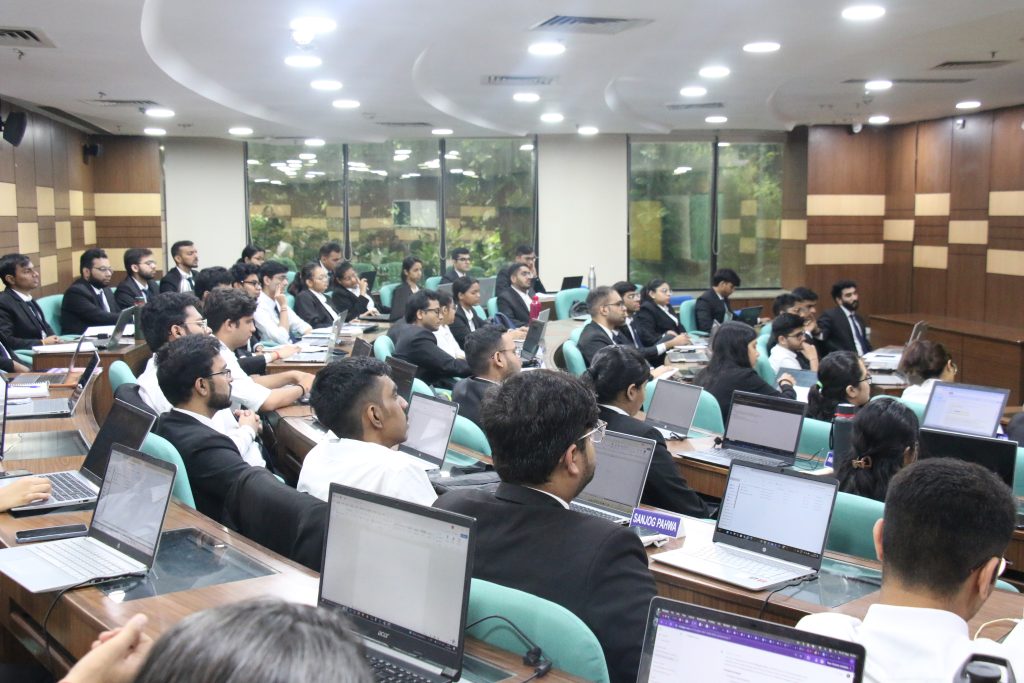
The world of finance is changing with every passing second being governed by geo-political standards and changes in the market trends. Markets shift, data grows, and decisions must be made faster with clarity. In this fast-moving system, a basic understanding of money is not enough. Students need skills that connect analysis, judgment, and leadership. A well-designed PGDM in financial management gives them that edge.
Unlike traditional courses, PGDM FM prepares students for business action. It trains them to respond, adapt, and think. The learning is not only about rules but also about reasoning. This is why many companies now prefer candidates with PGDM FM backgrounds. They value structure along with skill.
Let us explore how this course helps students become decision-makers in banking, consulting, fintech, and beyond.
How Financial Skills Support Business Growth
A finance expert must do more than record transactions. They are expected to plan costs, reduce risk, read markets, and explain results. These roles demand logic, numbers, and strategy [all at once]. This is where PGDM FM becomes relevant!
Top PGDM colleges in Delhi design their financial courses to match real-world conditions. Students practise case studies, work on live projects, and understand finance as a decision-making tool. They move beyond memorising formulas and learn to think like analysts. As a result, they can support businesses in staying profitable and focused.
What You Learn in PGDM Financial Management
The course offers a range of practical and technical skills. It trains students to act in complex situations without losing control or accuracy. Some of the most important learning areas include:
- Modelling and Forecasting
Students learn to predict business performance using patterns and financial tools. This improves planning.
- Risk and Return Evaluation
Graduates understand how to manage uncertainty. They analyse where to invest and how to avoid losses.
- Budget Management
Cost control and financial discipline are taught through real examples. This helps firms run smarter.
- Valuation and Capital Decisions
The course teaches how to measure value. This helps in making buy or sell decisions.
- Compliance and Regulation
Students learn about policy and ethical controls. This creates long-term trust in financial systems.
At FORE School of Management, these topics are presented through active sessions, tools, and guidance. This hands-on style builds real capability. That is why it stands among the best PGDM colleges in India.
Why Analysis Is Central to Every Finance Role
Good analysts do not guess. They look at patterns, compare facts, and build a clear answer. This skill is built slowly but becomes powerful over time. In PGDM FM, students are trained to focus on clarity and control. They learn how to present facts without confusion.
For example, while working on a cost review, students are taught to compare input cost changes with output prices. They explain the impact of changes without drama. This skill of staying focused while working with complexity is rare and it is needed across all finance jobs.
Learning to Handle Finance in a Digital World
Old financial systems no longer exist in isolation. Today, professionals work with dashboards, AI, apps, and digital tools. They track updates in real time and must explain results with both logic and software. A modern PGDM in financial management includes training in –
- Financial software
- Payment systems
- Compliance technology
- Digital banking channels
- Data tools for reporting
Most PGDM colleges in Delhi now offer exposure to these areas. At FSM, students also use live simulations, financial terminals, and industry tools. These methods help them adjust to today’s digital work styles with more confidence.
Job Roles After PGDM FM
Finance is not limited to one type of work. It connects with strategy, sales, operations, and even product design. That is why PGDM FM students can work across many fields. Common job titles include:
- Credit Analyst
- Investment Advisor
- Corporate Finance Executive
- Business Consultant
- Financial Planner
- Risk Analyst
- Fintech Product Analyst
These jobs need logic, timing, clarity, and teamwork. A PGDM FM course teaches students how to deliver results in these roles. It helps them handle pressure, present data, and make sound suggestions.
Why FORE School of Management Remains a Trusted Choice
Located in New Delhi, FORE School of Management offers a strong PGDM FM course. The programme focuses on smart learning, interaction, and result-based thinking. Students receive full-time support from experts, alumni, and placement teams.
What makes FSM one of the top PGDM colleges in Delhi is its balance. The learning is not rushed. It gives time for reading, applying, and reviewing ideas. Students move through topics with structure, not shortcuts. This is how they become thoughtful finance professionals.
The school has also built links with companies and institutions. This helps students build networks and understand what the job market expects. It is not only about landing a job. It is about staying useful in that job for the long term.
Long-Term Value of Financial Thinking
Many students begin their journey by wanting to earn more or join a good firm. But PGDM FM offers something deeper. It helps them stay relevant. When markets shift or rules change, trained professionals do not panic. They measure, compare, and take decisions that help others stay calm.
That is the value of strong financial learning. It allows growth with logic. It improves judgment and promotes ethical practice. Whether someone becomes a manager, an entrepreneur, or an investor, these skills remain useful. And when that training comes from one of the best PGDM colleges in India, the results become easier to trust.
Final View: Structured Training for Uncertain Markets
Finance will always carry risk. But those who study it properly can turn that risk into reward. PGDM FM is not about one exam or one grade. It is about long-term skills. These include analysis, planning, decision-making, and digital fluency. Students who want to learn how to manage business money should consider this programme. It brings purpose to numbers. It connects data with action. And in places like FORE School of Management, it builds leaders who speak clearly, act calmly, and think precisely.